
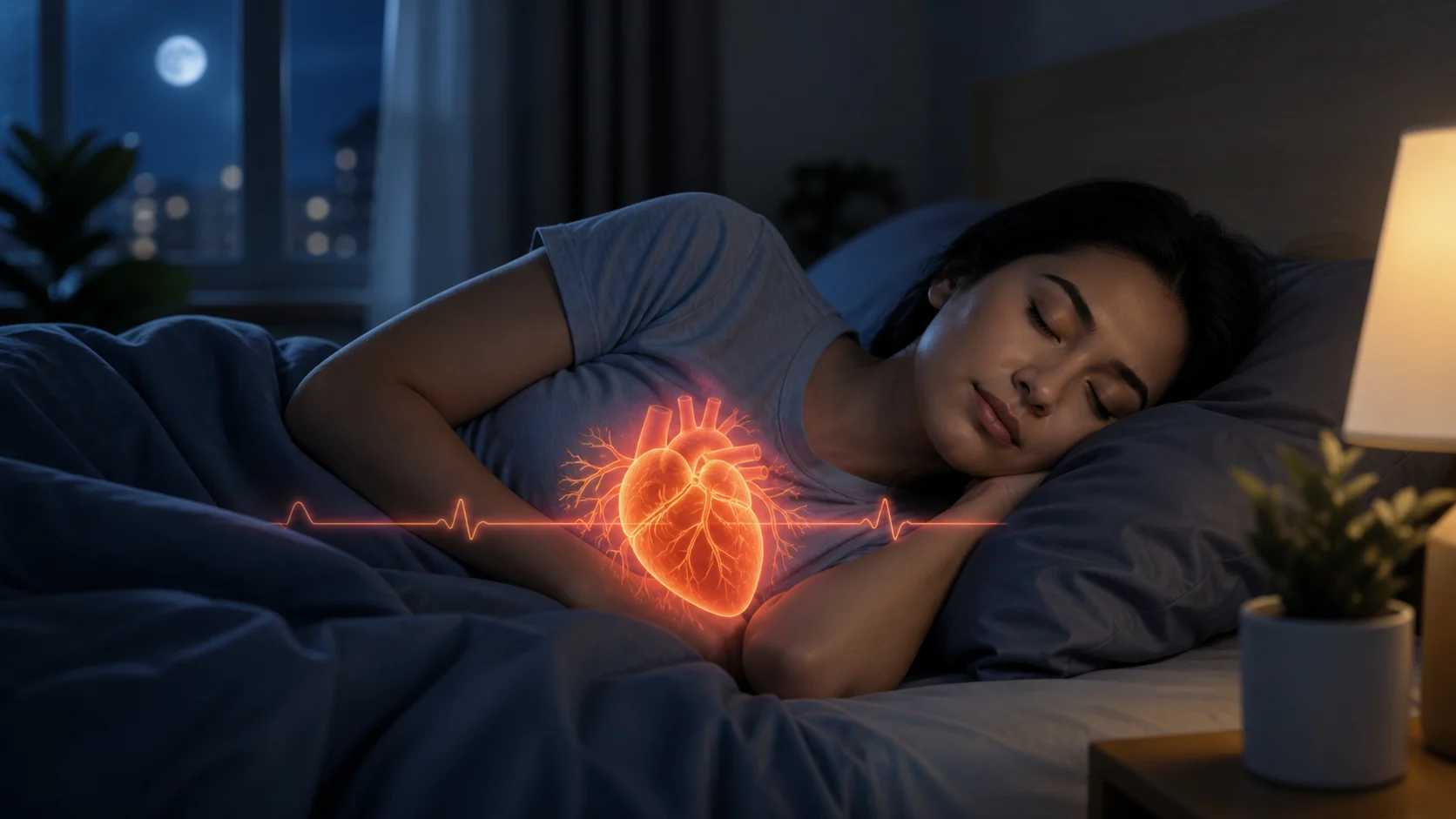
Most people think of sleep as downtime — a pause button for the body. But your heart doesn’t pause overnight. It slows down, recovers, and resets, and how well it does that depends entirely on how well you sleep. Poor sleep doesn’t just leave you tired the next day; over months and years, it quietly raises your risk for the same conditions that diet and exercise advice usually targets.
Here’s a connection that deserves a lot more attention than it gets.
What Happens to Your Heart During Sleep
| Sleep Stage | What Your Heart Does |
|---|---|
| Light sleep | Heart rate and blood pressure begin to drop |
| Deep sleep | Heart rate reaches its lowest, most restful point — true recovery time |
| REM sleep | Heart rate and breathing become more variable, mirroring dream activity |
A full night moves through several cycles of these stages. Cutting sleep short — or fragmenting it with frequent waking — means your heart never gets the deep, restful stretch it depends on.
How Poor Sleep Affects Your Heart Over Time
- Raises blood pressure — sleep deprivation keeps stress hormones elevated even during the day
- Increases inflammation — linked to artery damage over time
- Disrupts blood sugar regulation — raising diabetes risk, which itself raises heart risk
- Promotes weight gain — poor sleep alters hunger hormones, encouraging overeating
- Raises irregular heartbeat risk — particularly with chronic short sleep or sleep apnea
One bad night isn’t the concern. It’s the cumulative effect of consistently poor sleep, night after night, that adds up to measurable cardiovascular risk.
Sleep Apnea: The Connection Most People Miss
Sleep apnea — repeated pauses in breathing during sleep — is one of the most underdiagnosed contributors to heart disease.
| What Happens | Why It Matters for Your Heart |
|---|---|
| Breathing repeatedly stops and restarts | Oxygen levels drop, forcing the heart to work harder |
| Frequent micro-awakenings | Prevents deep, restorative sleep stages |
| Chronic strain over years | Linked to high blood pressure, irregular heartbeat, and heart failure |
Common signs of sleep apnea:
- Loud, frequent snoring
- Gasping or choking sounds during sleep
- Waking up still feeling exhausted
- Morning headaches
- Excessive daytime sleepiness
If a partner has mentioned loud snoring with pauses in breathing, that’s worth raising with a doctor — not dismissing as “just snoring.”
How Much Sleep Your Heart Actually Needs
| Age Group | Recommended Sleep |
|---|---|
| Adults (18–64) | 7–9 hours per night |
| Older adults (65+) | 7–8 hours per night |
Both too little and too much sleep have been linked to higher cardiovascular risk — consistency and quality matter as much as total hours.
Everyday Habits for Better Sleep — and a Healthier Heart
- Keep a consistent sleep schedule — same bedtime and wake time, even on weekends
- Limit screens before bed — blue light delays your body’s natural wind-down
- Watch evening caffeine and alcohol — both disrupt deep sleep, even if they help you fall asleep faster
- Keep your bedroom cool, dark, and quiet — small environment changes improve sleep quality measurably
- Get daytime sunlight and activity — helps regulate your body’s natural sleep-wake rhythm
- Wind down before bed — a consistent pre-sleep routine signals your body to relax
When Sleep Issues Need More Than a Habit Change
- Snoring with pauses in breathing, noticed by a partner
- Persistent insomnia lasting more than a few weeks
- Waking up gasping or short of breath
- Excessive daytime sleepiness despite adequate hours in bed
- Known heart condition with new or worsening sleep disruption
What Evaluation Looks Like at Our Hospital
| Step | What Happens |
|---|---|
| 1. Detailed History | Sleep patterns, daytime symptoms, and cardiac risk factors reviewed together |
| 2. Clinical Examination | Physical assessment for related signs, including blood pressure and weight-related risk |
| 3. Targeted Tests | ECG, blood work, and sleep study referral where indicated |
| 4. Specialist Coordination | Cardiology and pulmonology input when sleep and heart symptoms overlap |
| 5. Personalized Plan | Lifestyle changes, treatment, or therapy matched to what’s actually driving the problem |
Sleep and heart symptoms are often treated as separate issues — but evaluating them together frequently uncovers the real underlying cause faster.
Why Patients Trust Our Cardiology Team
As a 250-bed multispecialty hospital, our approach connects the dots other check-ups might miss:
- Experienced cardiologists who ask about sleep, not just diet and exercise
- On-site diagnostics — ECG, blood work, and imaging for faster, fuller answers
- Coordinated specialist access — pulmonology and sleep medicine, when needed
- Practical guidance that fits real routines, not just a printed pamphlet
- Six decades of trust in Vadodara, rooted in attentive, patient-first care
The Bottom Line
Sleep isn’t a passive backdrop to your health — it’s active maintenance time for your heart. Treating consistent poor sleep as a minor inconvenience, rather than a cardiovascular risk factor, is one of the most common blind spots in everyday health.
If your sleep has been off for weeks, your heart has likely noticed too.
To schedule a cardiology consultation, contact Bhailal Amin General Hospital today.
This article is intended for general awareness and does not replace professional medical advice. Please consult a qualified physician for diagnosis and treatment recommendations specific to you.