
19 Aug 2026
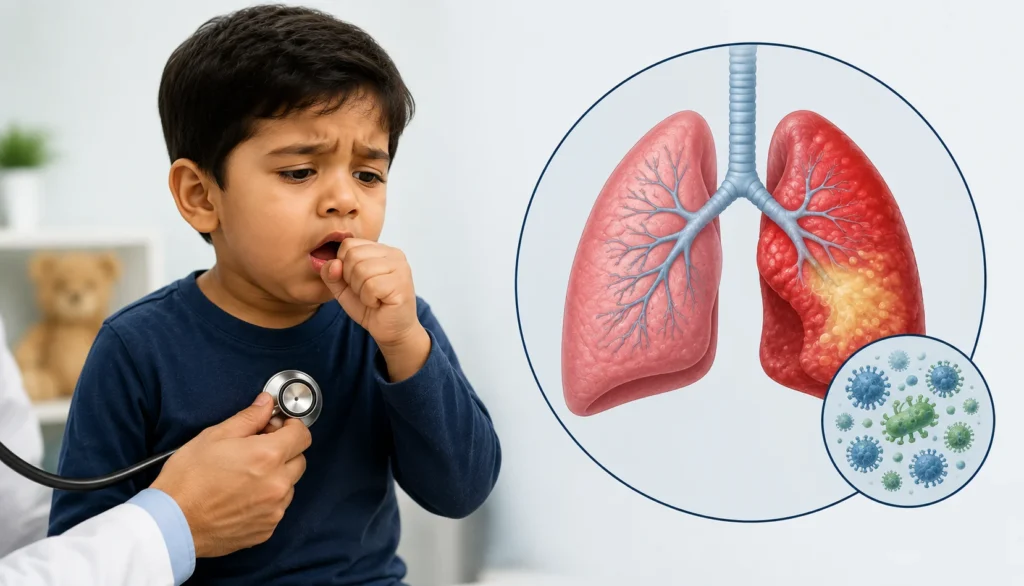
Pneumonia in Children
Read more

Acute gastroenteritis is a common childhood illness that causes diarrhoea, vomiting, stomach cramps, and sometimes fever. It is usually caused by viral or bacterial infections spread through contaminated food, water, or poor hand hygiene. The greatest concern is dehydration, especially in infants and young children, as they lose fluids much faster than adults. Signs of dehydration include excessive thirst, dry mouth, sunken eyes, reduced urination, and unusual drowsiness.
Most children recover well with adequate fluids, oral rehydration solution (ORS), and continued feeding. However, persistent vomiting, blood in the stools, high fever, or signs of dehydration require immediate medical evaluation. Good hand hygiene, safe drinking water, proper food preparation, and rotavirus vaccination play an important role in preventing this common illness and keeping children healthy.
First NABH-accredited hospital in the region
First & only hospital with NABH emergency dept. in the region
First hospital with NABH nursing dept. in the region

NABL-accredited pathology dept.
NBEMS-accredited for postgraduate training
Take a proactive step toward early detection and better health. Fill in your details and our team will guide you through the right
Reach out to us for any inquiries or assistance—we're just a message or call away!
Fill out the form and our care team will assist you with scheduling your scan.