

25 Aug 2026
Conscious Sedation
Read more
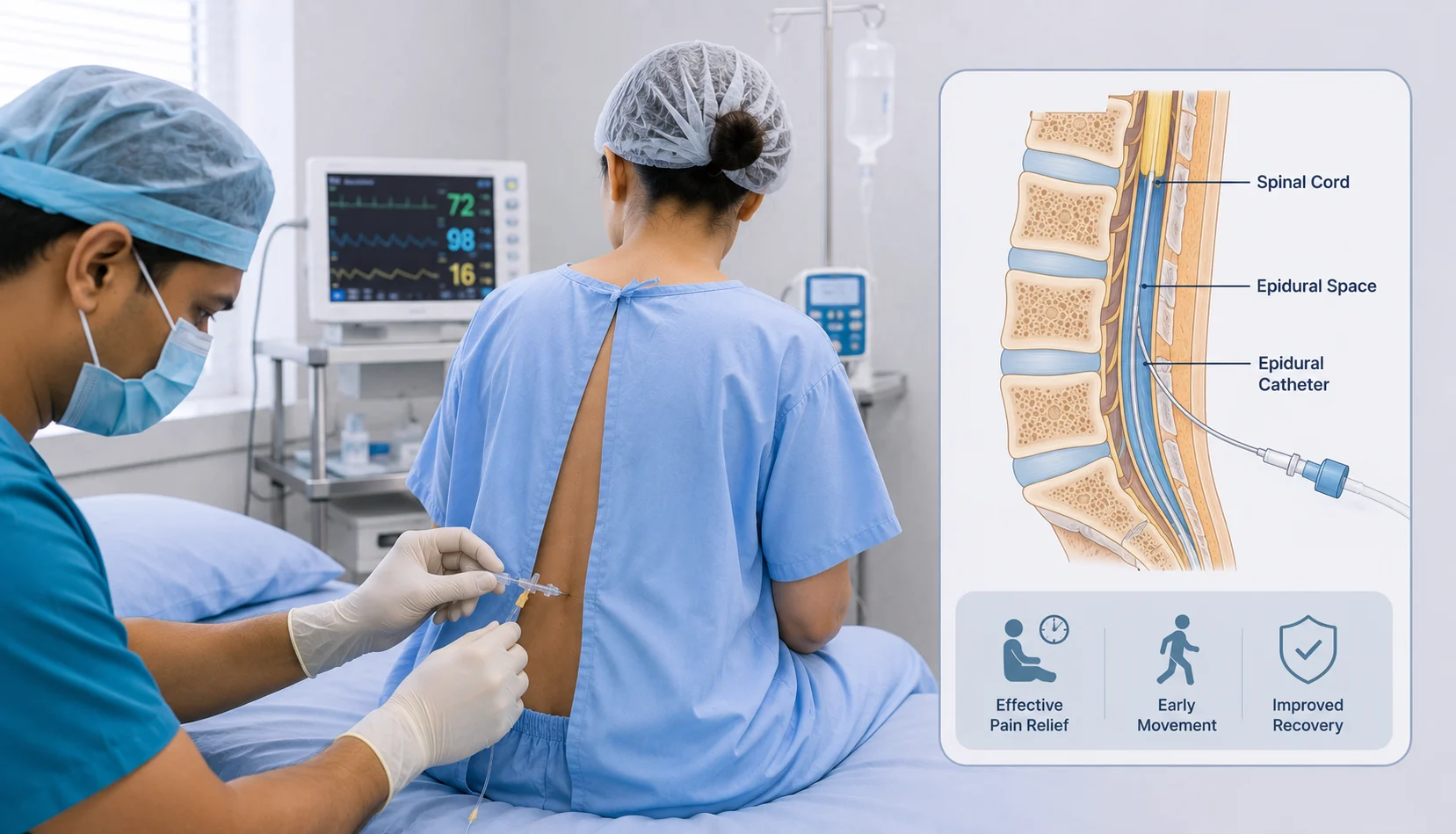
Epidural anaesthesia involves placing a thin, flexible tube called a catheter into the space just outside the spinal cord through the lower back. This allows anaesthetic medication to be given continuously or in repeated doses to provide prolonged pain relief. Epidurals are widely used during labour and childbirth, as well as for certain major abdominal, chest, and lower limb surgeries. Unlike spinal anaesthesia, the dose of medication can be adjusted according to your needs and continued even after surgery for effective pain control. Depending on the procedure, you may remain awake or receive additional sedation. Epidural anaesthesia helps reduce pain while allowing earlier movement and recovery after surgery. Your anaesthesiologist will explain the benefits, possible side effects, and whether an epidural is suitable for your individual medical condition.
First NABH-accredited hospital in the region
First & only hospital with NABH emergency dept. in the region

First hospital with NABH nursing dept. in the region

NABL-accredited pathology dept.

NBEMS-accredited for postgraduate training
Take a proactive step toward early detection and better health. Fill in your details and our team will guide you through the right
Reach out to us for any inquiries or assistance—we're just a message or call away!
Fill out the form and our care team will assist you with scheduling your scan.