
25 Aug 2026
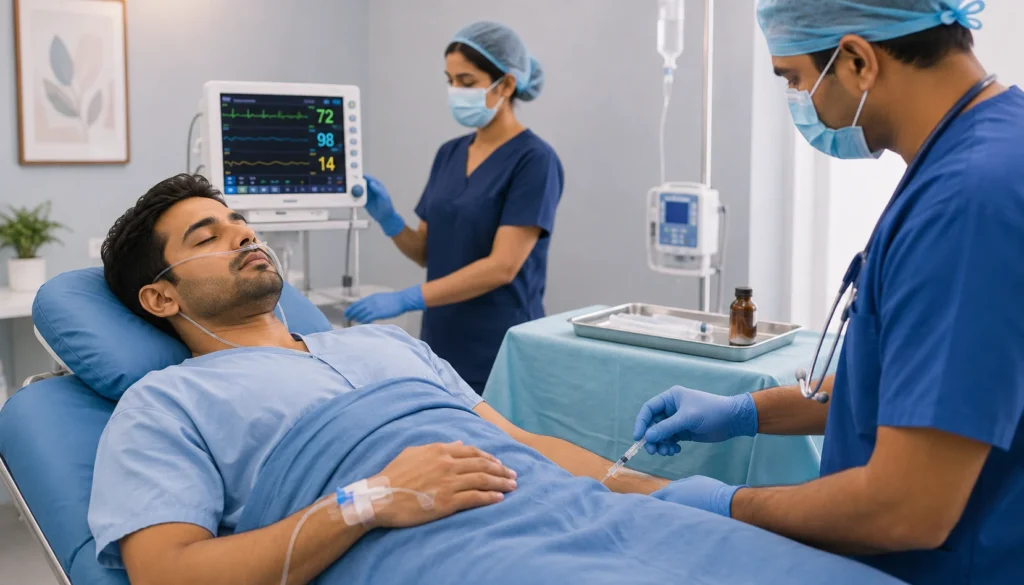
Conscious Sedation
Read more
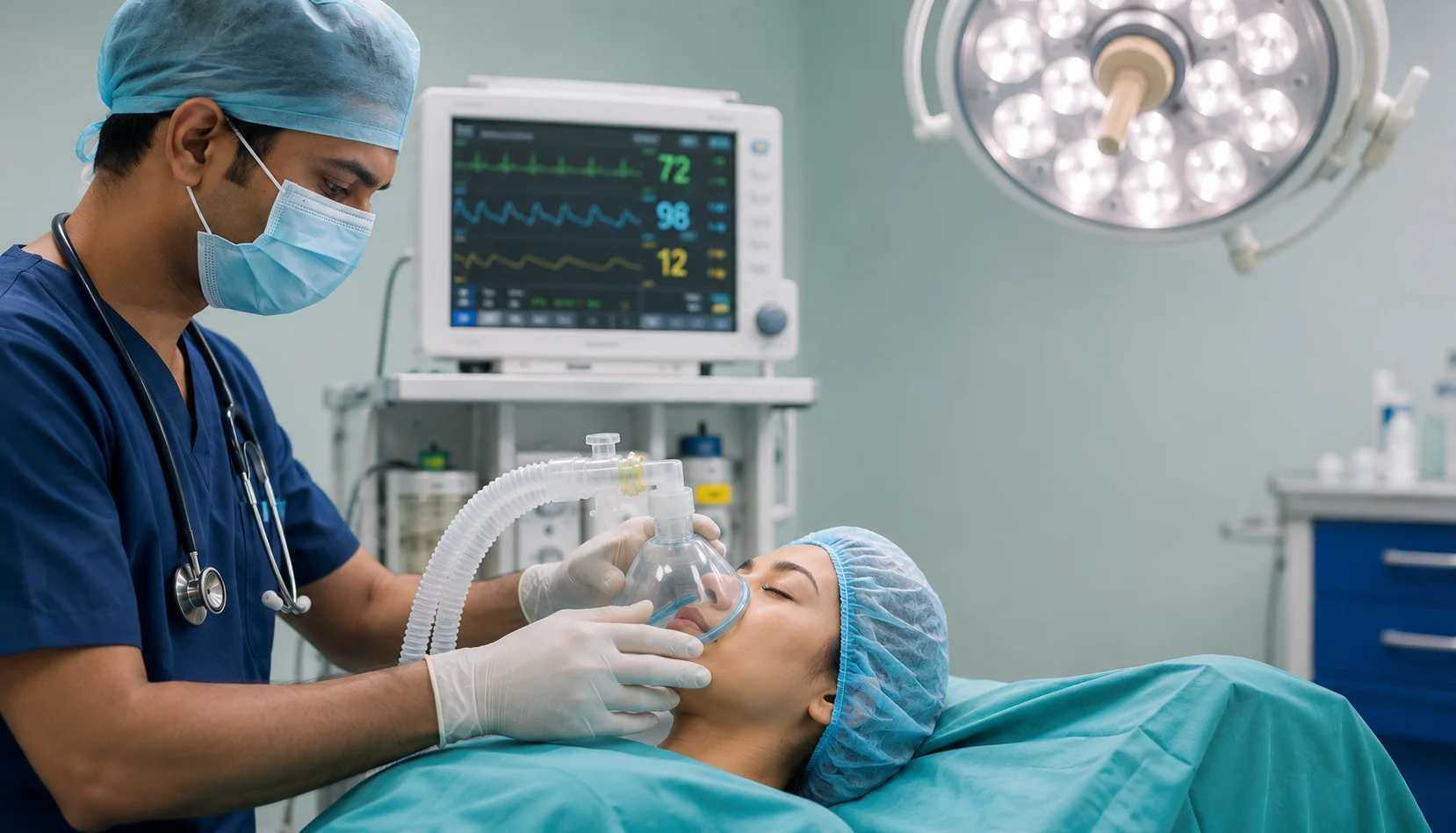
General anaesthesia is a type of anaesthesia that allows you to remain completely unconscious during an operation, ensuring that you feel no pain and have no awareness of the procedure. It is commonly used for major surgeries involving the abdomen, chest, brain, bones, or when complete muscle relaxation is required. Anaesthesia is administered through medications given into a vein, inhaled gases, or a combination of both. Throughout the procedure, a specially trained anaesthesiologist continuously monitors your heart rate, blood pressure, breathing, oxygen levels, and other vital signs to ensure your safety. Most people wake up shortly after surgery and may experience temporary drowsiness, sore throat, or nausea, which usually resolve quickly. Before surgery, your anaesthesiologist will carefully review your medical history and discuss the safest anaesthesia plan for you. Modern general anaesthesia is extremely safe, and serious complications are uncommon when administered by trained professionals.
First NABH-accredited hospital in the region
First & only hospital with NABH emergency dept. in the region

First hospital with NABH nursing dept. in the region

NABL-accredited pathology dept.

NBEMS-accredited for postgraduate training
Take a proactive step toward early detection and better health. Fill in your details and our team will guide you through the right
Reach out to us for any inquiries or assistance—we're just a message or call away!
Fill out the form and our care team will assist you with scheduling your scan.