
25 Aug 2026
Spinal Anaesthesia
Read more
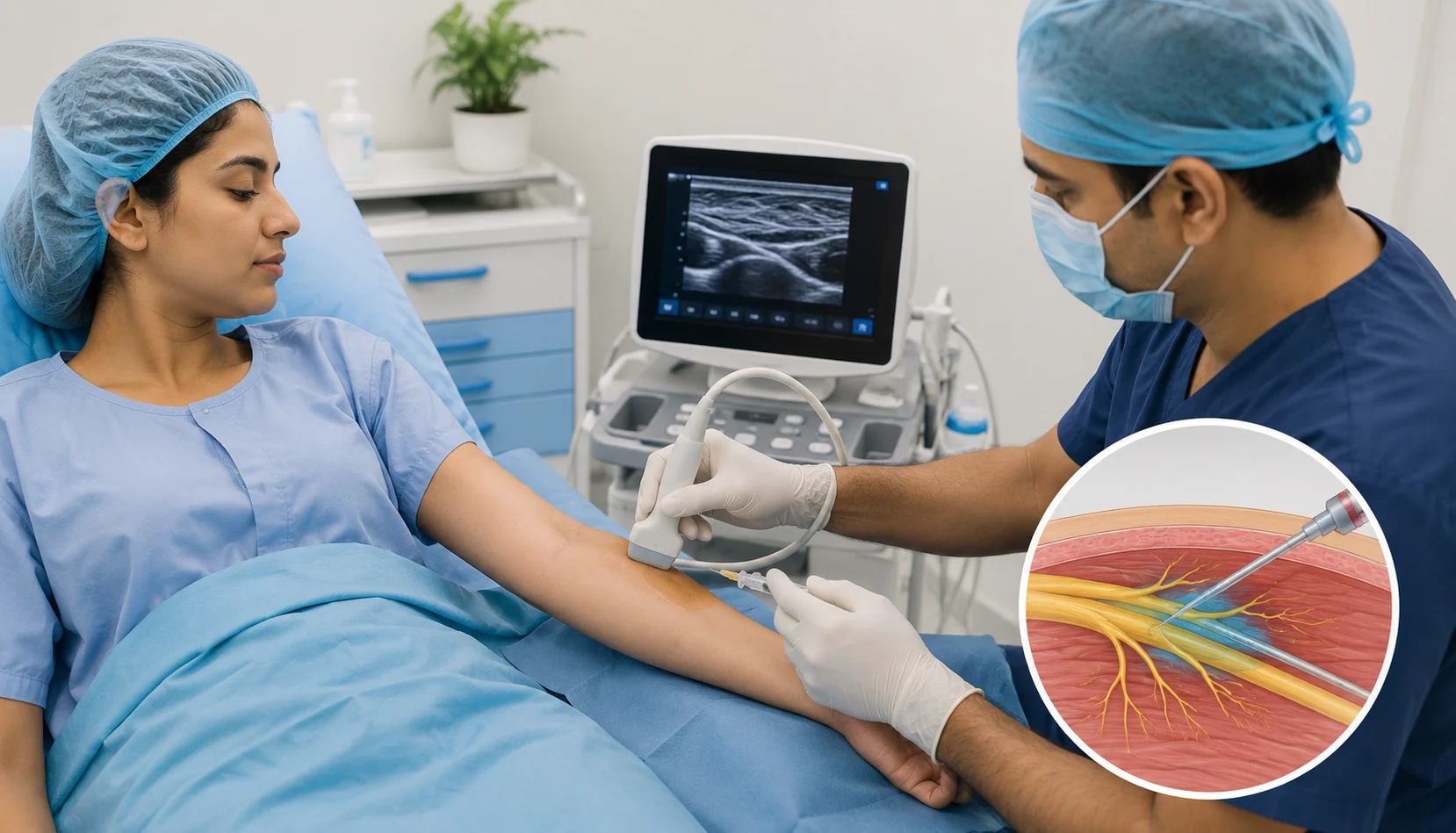
A peripheral nerve block, also known as regional anaesthesia, is a technique in which anaesthetic medication is injected around specific nerves to temporarily numb a particular part of the body, such as the shoulder, arm, hand, leg, or foot. It is commonly used for orthopaedic, plastic, and hand surgeries, either alone or in combination with general anaesthesia. By blocking pain signals from reaching the brain, a nerve block provides excellent pain relief during surgery and often for several hours afterwards, reducing the need for strong pain medications. Many nerve blocks are performed using ultrasound guidance, allowing the anaesthesiologist to place the medication accurately and safely. As the anaesthetic wears off, normal sensation and movement gradually return. Your anaesthesiologist will advise you on protecting the numb limb until full feeling and strength have returned, helping ensure a safe and comfortable recovery.

First NABH-accredited hospital in the region

First & only hospital with NABH emergency dept. in the region

First hospital with NABH nursing dept. in the region

NABL-accredited pathology dept.

NBEMS-accredited for postgraduate training
Take a proactive step toward early detection and better health. Fill in your details and our team will guide you through the right
Reach out to us for any inquiries or assistance—we're just a message or call away!
Fill out the form and our care team will assist you with scheduling your scan.