
19 Aug 2026
Fatty Liver Disease (MASLD)
Read more
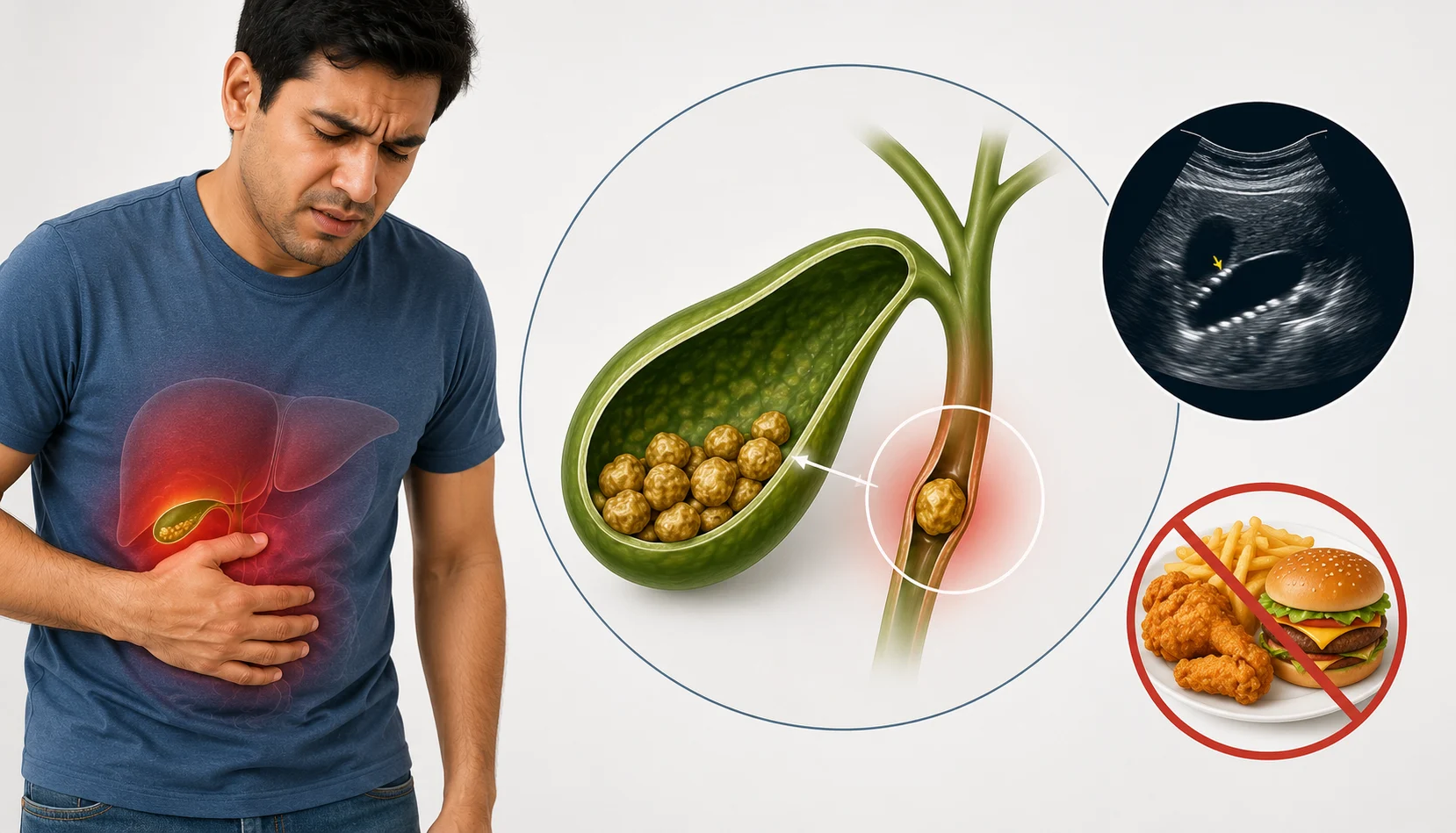
Gallstones are hard deposits that form inside the gallbladder, a small organ that stores bile to help digest fats. Many people with gallstones have no symptoms, but when a stone blocks the flow of bile, it can cause sudden, severe pain in the upper abdomen, often after eating fatty meals. Some people may also experience nausea, vomiting, fever, or jaundice if complications develop.
Gallstones are more common in women, people over 40 years of age, those who are overweight, and individuals with diabetes or a family history of the condition. Ultrasound is the most common test used to diagnose gallstones. While symptom-free gallstones may not always require treatment, painful or complicated gallstones are usually treated with minimally invasive surgery to remove the gallbladder. Early evaluation helps prevent serious infections and other complications.
First NABH-accredited hospital in the region
First & only hospital with NABH emergency dept. in the region
First hospital with NABH nursing dept. in the region

NABL-accredited pathology dept.
NBEMS-accredited for postgraduate training
Take a proactive step toward early detection and better health. Fill in your details and our team will guide you through the right
Reach out to us for any inquiries or assistance—we're just a message or call away!
Fill out the form and our care team will assist you with scheduling your scan.